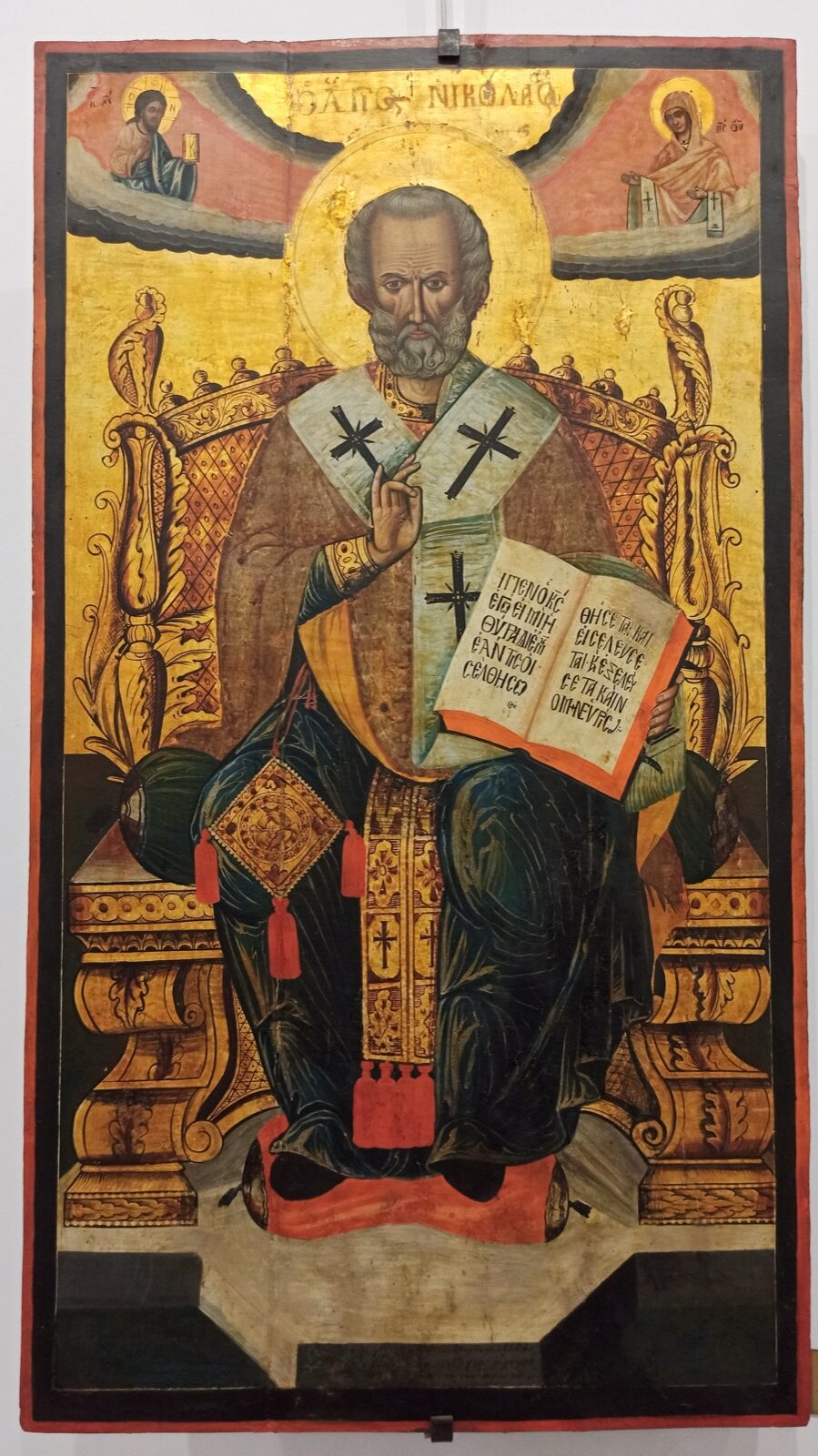
In one of the best-known stories about Saint Nicholas, kindness arrives unnoticed. During the night, someone leaves a purse of gold through the window of an impoverished household. The giver departs before anyone can recognise him. The family gains a chance to begin again, and the story of this help continues to be told centuries after the death of the man who offered it.
Stories such as this helped shape the veneration of Saint Nicholas of Myra, the Wonderworker. In Bulgarian tradition, his feast brings together prayers for protection, gratitude for deliverance and the pleasure of a shared meal. On 6 December, the Church’s remembrance and family custom meet in one of the most enduring celebrations of the winter calendar.
To understand why fish is prepared, why a scale is kept as a token of prosperity and why so many Bulgarian churches bear the saint’s name, we must follow the long journey from his life in religious tradition to the rituals preserved at home.
The bishop of Myra
The historical foundations of the tradition lead to Asia Minor. Saint Nicholas is venerated as a fourth-century bishop of Myra in Lycia, in what is now Turkey. His designation as Nicholas of Myra preserves the name of his episcopal see.
Sources for his personal life are scarce. The detailed biography familiar today belongs chiefly to hagiography and Church tradition. Different accounts give different dates for his birth and death. Historical evidence therefore needs to be distinguished from the miraculous narratives through which Christian communities express their veneration.
His life in Church tradition relates that Nicholas was born in Patara to a Christian family. He entered religious service while still young and, after the death of his parents, used his inheritance to help the poor. He was later chosen as bishop of Myra.
In this portrait, spiritual service is inseparable from responsibility towards others. The bishop listens to those in need, intercedes for people who suffer and shares what he possesses. The same tradition describes the trials he endured during the persecution of Christians: imprisonment and deprivation, followed by his return to ministry.
Three gifts and human dignity
The story of a father and his three daughters holds a special place in the saint’s memory. Once prosperous, the family had fallen into extreme poverty. In desperation, the father contemplated forcing his daughters into a degrading way of life to provide for the household. When Nicholas learned of this, he decided to help in secret.
The first purse of gold enabled the eldest daughter to marry. A second gift followed, then a third. The father began to keep watch in the hope of discovering his benefactor. On the final visit, he recognised Nicholas and thanked him.
In the Church’s interpretation, the secrecy of the gift protects both parties. The recipient is spared public humiliation, while the giver relinquishes the prospect of praise. The timing of the help is equally significant. It reaches the family while disaster can still be prevented.
The story gives charity a concrete meaning. It calls for attentiveness to another person’s circumstances, discretion and a willingness to act. These qualities help explain why Saint Nicholas has remained close to people across so many different ages.
Protector of the innocent and of travellers
Another hagiographical account presents him as the defender of three men unjustly condemned to death. On hearing of their sentence, Nicholas hurried to the place of execution. The executioner was preparing to carry out the order when the bishop passed through the crowd, took away the sword and freed the innocent men. He then confronted the governor responsible for the injustice.
Tradition also preserves a story of famine in Lycia. The saint appeared in a dream to a merchant carrying provisions and directed him towards the starving population. Concern for daily bread thus joins his intercession for life and freedom.
Saint Nicholas’s connection with the sea became particularly enduring. According to his Orthodox life, the ship on which he was travelling to the Holy Land was caught in a storm. After the saint prayed, the tempest subsided. The same account includes the saving of a sailor who had fallen from the mast.
For Christian believers, the miracles bear witness to God’s help through the saint. For sailors and their families, this image took on a deeply personal meaning. Every departure brought separation and uncertainty, while a safe return called for gratitude. The name of Saint Nicholas gradually became associated with the hope that a dangerous journey could end at home.
How the feast took shape
Veneration of Saint Nicholas spread during the centuries after his death. As early as the sixth century, Emperor Justinian I built a church dedicated to him in Constantinople. The saint came to be honoured in both Eastern and Western Christianity, with his image associated with the protection of sailors, travellers, merchants and children.
His feast on 6 December is traditionally associated with the commemoration of his death. The celebration known in Bulgaria as Nikulden developed gradually. At its heart lies liturgical remembrance. Around it, different communities formed their own narratives, customs and ways of celebrating. There is therefore no single year in which the entire complex of traditions familiar today suddenly came into existence.
An important moment in the history of his veneration was the transfer of relics from Myra to the Italian city of Bari in 1087. Bari became a major pilgrimage centre. In the Bulgarian Church calendar, this event is commemorated on 9 May, also known as Summer Nikulden. The December feast retains the strongest presence in family ritual.
The Western European tradition of gifts for children followed a different path. The Dutch name Sinterklaas travelled to America and contributed to the development of Santa Claus. In Bulgarian culture, the church’s patronal feast, the name day and the shared fish meal remain among the most recognisable expressions of devotion.
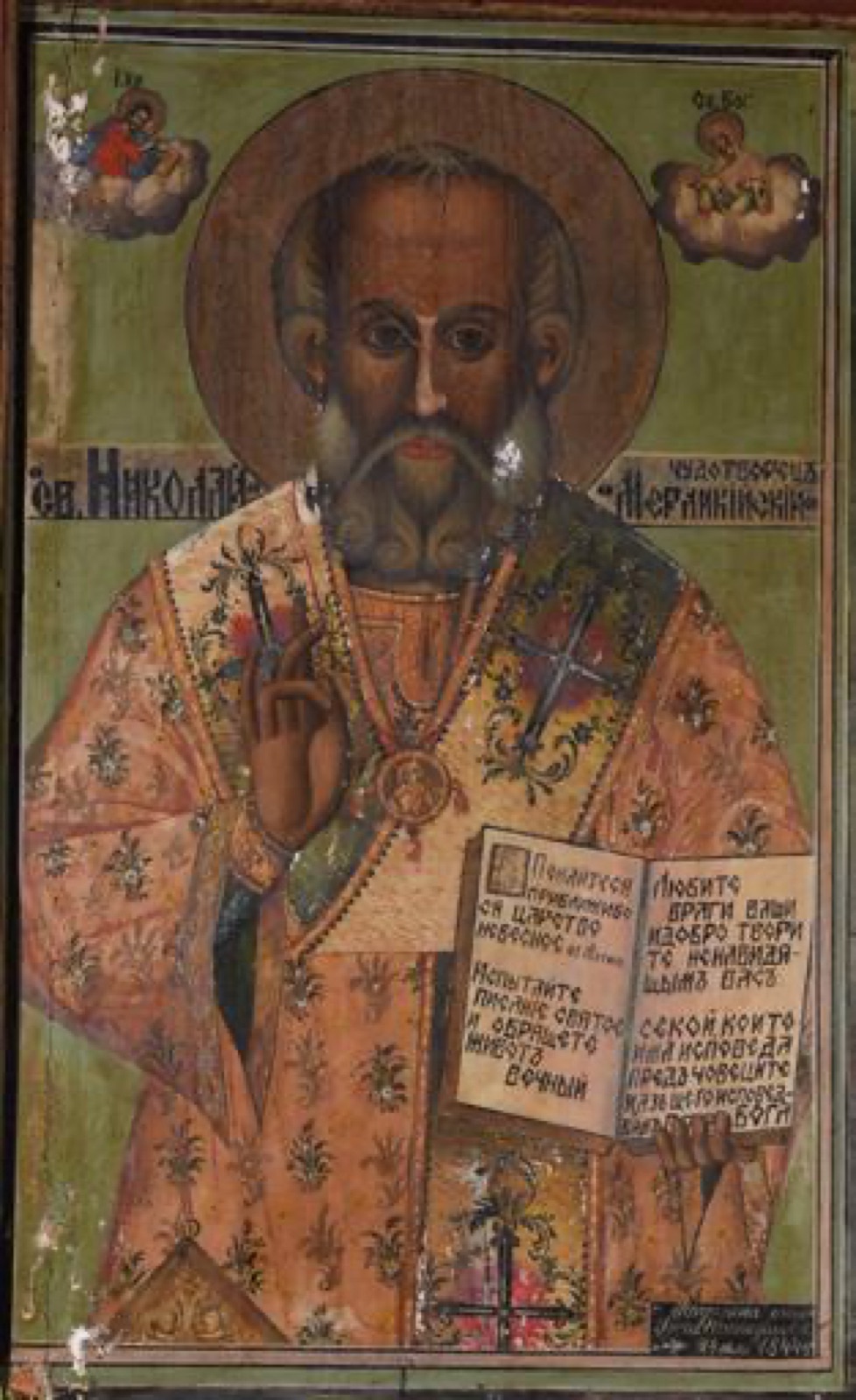
Saint Nicholas in the Bulgarian folk imagination
As Church devotion became woven into folk culture, the saint acquired new characteristics. In one legend, God divides the world among six saintly brothers. The seas and oceans fall to Nikola. He becomes master of the waters and protector of those who earn their living from them or travel across them.
This is a folk narrative governed by the imagination’s own principles. Kinship among the saints and the division of the world turn nature into an intelligible order. Faced with danger, a person knows towards whom to direct prayer and hope.
The importance of the feast is also reflected in the old designation of December as Nikulski, the month of Nicholas. The date occupies a significant place in the transition to the winter festive season. Home, food and the gathering of relatives gradually move to the foreground, while preparations for Nikulden extend into the preceding days.
The Church honours Saint Barbara on 4 December, Saint Sabbas on 5 December and Saint Nicholas on 6 December. A Bulgarian saying brings the three days together in a domestic scene: “Barbara cooks, Sabbas kneads, Nicholas welcomes guests.” In some folk accounts, Varvara and Sava are sisters preparing the table for their brother Nikola. This kinship belongs to folklore; the Church’s lives concern different saints.
The sequence of celebrations shows how naturally the calendar becomes a way of organising shared life. There is a time for preparation, a time for welcoming others and a time for gratitude. Ritual orders everyday actions and gives them a meaning that families can pass on.
The legend of the carp and the rescued boat
Among Bulgarian legends, the story of the leaking boat is especially popular. Saint Nicholas was travelling on the water when a storm arose. A hole opened in the boat, water began to pour in and the people aboard were in danger of drowning. The saint caught a carp and used it to plug the opening. Everyone was saved.
This legend explains the carp’s place of honour at the Nikulden table. The fish is associated with deliverance, and the festive dish takes on the meaning of an offering of thanks. The narrative differs from the Church’s account of a storm calmed through prayer, although both express the hope of salvation.
Along the Black Sea coast, devotion is also directly linked to people’s livelihoods. Ethnographic accounts from the Burgas region describe prayers for sailors, candles lit by their relatives and rites commemorating those lost at sea. Such local practices show how a shared feast acquires a particular significance through the life of each community.
Ribnik and ritual bread
One of the most characteristic Nikulden dishes is ribnik. A whole carp is stuffed and enclosed in dough, which may be decorated like a festive loaf. Depending on the region, the filling includes walnuts, onions, raisins or bulgur. Other ways of preparing the fish reflect local custom and the means of each household.
Meat-free dishes such as beans, cabbage, stuffed cabbage leaves, stuffed peppers and wheat are arranged around the ribnik. The variety of the meal reminds us that tradition has always belonged to a particular kitchen. Preserving it allows for differences between families, and recipes acquire a special meaning through the people from whom they were learned.
Nikulden falls during the Nativity Fast, which runs from 15 November to 24 December. Church tradition permits fish on the feast day. This permission does not prescribe a particular recipe or require that the fish be carp. The specific dish belongs to folk ritual, while the spiritual meaning of the day remains rooted in prayer, gratitude and charity.
Bread is another important presence at the festive table. Ethnographic descriptions mention kolatsi and bogovitsi, types of ceremonial bread, as well as loaves named “Saint Nicholas” or “the saint”. Good, clean wheat was set aside for the ritual flour. Its preparation reveals the special care given to food intended for a feast and a blessing.
In some settlements, the bread and ribnik were taken to church to be blessed with incense. Elsewhere, the priest visited people’s homes. The family then sat down together, and the table remained laid throughout the day to welcome relatives, neighbours and guests. Church and home thus participated in a shared celebration.
The social meaning of the custom can be seen in this open table. Food has been prepared even for someone who has not yet arrived. The feast provides an opportunity to renew bonds between generations and neighbours. Sharing turns a family’s happiness into a community experience.
The scale, the cross-shaped bone and gratitude for life
Folk belief also assigns particular meaning to parts of the festive fish. A carp scale is kept in a purse in the hope of prosperity. In some places, a bone from the head resembling a cross was sewn into a child’s cap as protection against the evil eye. These are beliefs through which families express their wishes for health and security.
Nikulden is also associated with a fish kurban, a meal offered and shared in thanksgiving after danger or deliverance. Preparing and distributing the food expresses gratitude for a life preserved. In such customs, the feast acquires a particularly personal significance because it recalls a specific family story.
This is why old rituals deserve thoughtful attention. Behind a seemingly small gesture lies a profound human wish: that a child should grow up healthy, that the household should have enough, that a loved one should return. Studying these practices reveals how people understood uncertainty and sought reassurance within their community.
Customs have regional and family variations. What has been recorded in one part of Bulgaria should not automatically be attributed to every other. The richness of the feast also lies in these differences, which can be preserved through local memories, old notes and carefully documented accounts.
The name day and the living memory of home
Nikulden has a special importance in the families of people named Nikola, Nikolay, Nikolina and related names. The name day connects an individual’s life with the Church calendar. Greeting the person also recalls their heavenly patron.
In contemporary homes, some old practices may have disappeared while others continue almost unnoticed. A family recipe survives, along with a telephone call to a relative, a particular place at the table or the memory of the person who once prepared the fish. The feast preserves a sense of belonging even when loved ones live far apart.
The charity at the heart of Saint Nicholas’s life offers an immediate way to continue the tradition. Helping someone in need, sharing food and paying attention to a lonely relative give the feast a practical meaning. The saint’s memory passes from a story into a personal choice.
Saint Nicholas Church in Karlovo
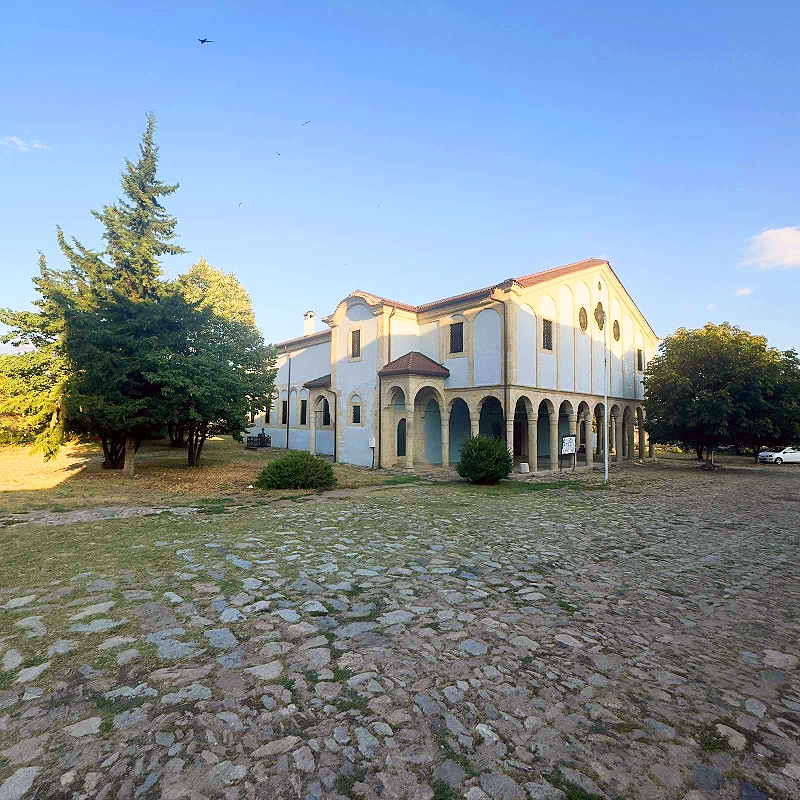
In Karlovo, devotion to the saint has an enduring place in the townscape. Saint Nicholas Church was built in 1847 and forms part of the architectural heritage of the Bulgarian National Revival. Its bell tower was built in 1890.
The municipal description preserves a beautiful local detail: the syllables of the Bulgarian name “Sveti Nikolay” can be heard in the ceremonial ringing of the bells. The saint’s name thus belongs to the town’s remembered sounds, in a place that generations of Karlovo residents have known as a setting for prayer and meeting.
The churchyard contains the grave of Gina Kuncheva, the mother of Vasil Levski. The Historical Museum also identifies a memorial in the southern part of the yard to the victims of the terror of 1877, remembered locally as “Strashnoto”. Religious, family and civic memory are gathered together here.
This proximity gives a visit particular depth. The church bears the name of a saint revered for intercession and charity, while its grounds preserve the names and destinies of people from Karlovo’s history. The setting allows the feast to be experienced as gratitude towards earlier generations who sustained the town and its spiritual centres.
The church’s heavenly patron is honoured on 6 December. For Karlovo residents, this is a natural occasion to turn their attention to the building, its history and the meaning of its dedication. Visitors should preserve the quiet and respect the worship taking place there.
Bulgarian Nikulden customs provide the wider cultural setting for this day. Karlovo’s particular family traditions belong to the people who preserve them: their recipes, name-day celebrations, memories and expressions of gratitude. Each account can add knowledge of our own town to the history of the feast.
Nikulden brings distant eras into a familiar human experience. The saint’s life tells of timely help, folk custom expresses it through bread and hospitality, and the church preserves a place for shared prayer. In Karlovo, that connection bears the name Saint Nicholas and continues to remind us of our responsibility towards one another.